Architectural and accent lighting
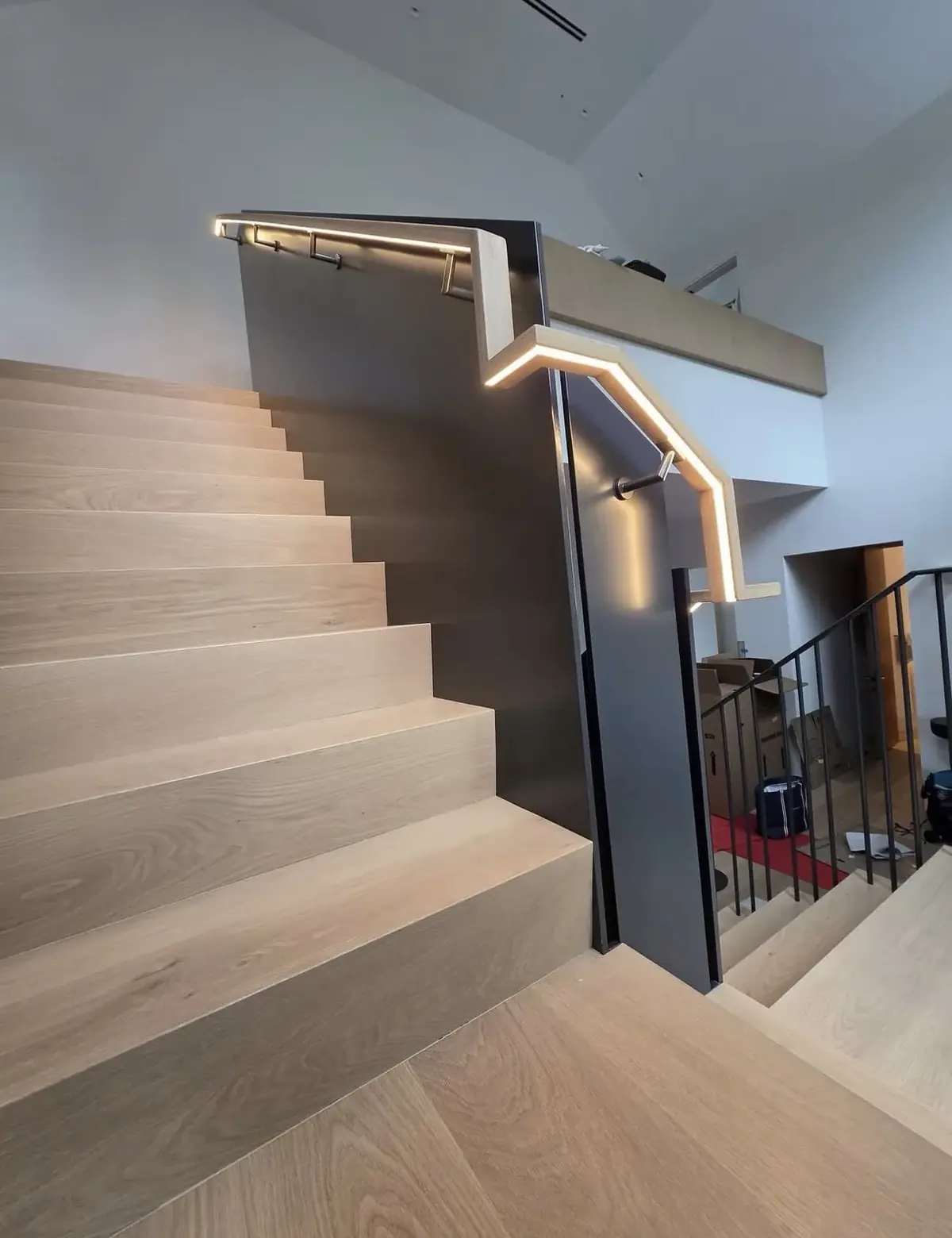
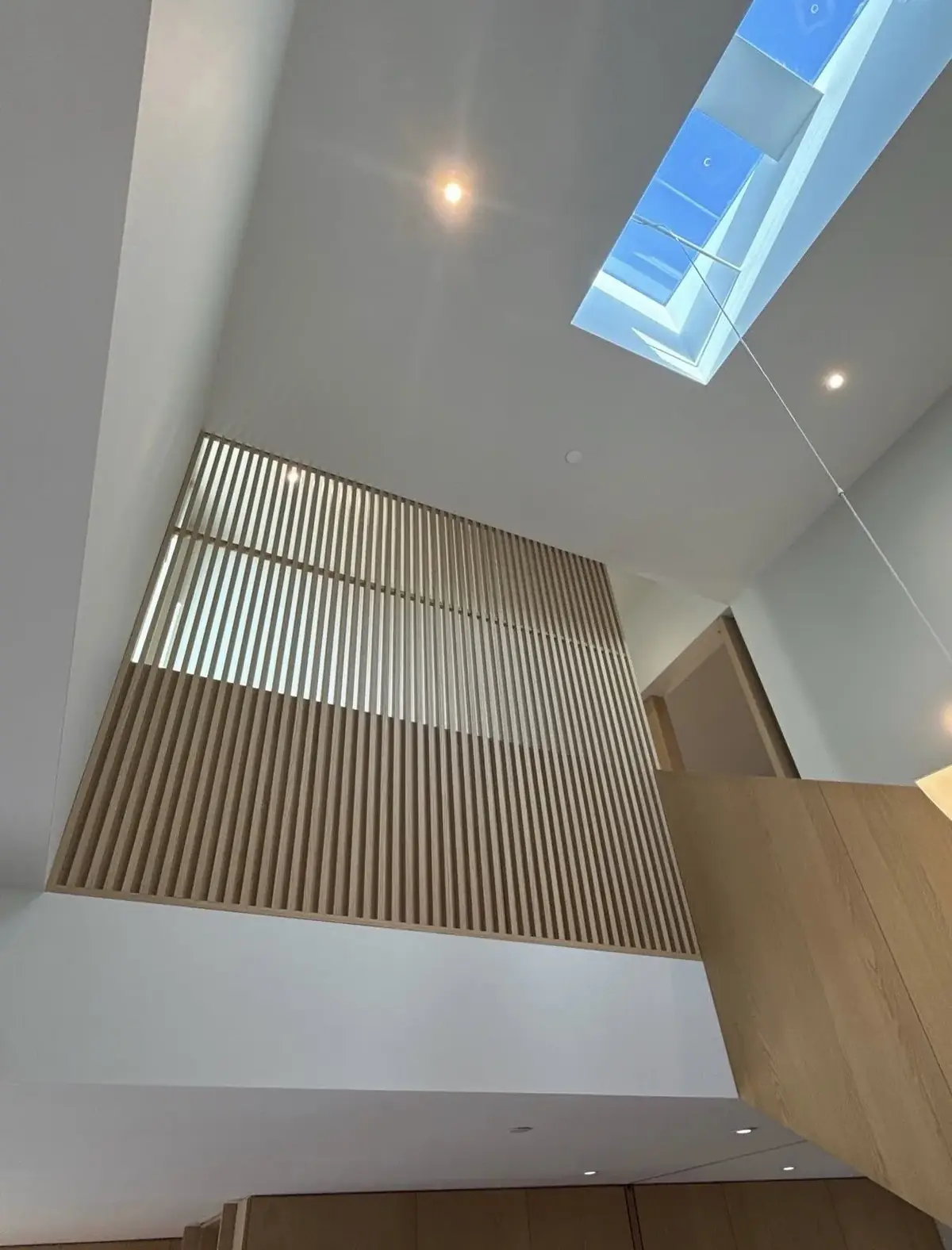
Light that belongs to the building rather than to a fixture: LED strip in a cove or a tray ceiling, under a handrail, under a counter edge, behind a slat screen or along a stair. The fixture is hidden; what you see is the surface it washes.
What it includes: working out where the light should land, choosing a channel and diffuser so the strip reads as a clean line rather than a row of dots, placing the driver somewhere it can be reached later, and pairing it with a dimmer that goes all the way down without flicker.
When a home needs it: during a renovation, when a cove or a stair is being built anyway; for a feature wall or a ceiling detail that deserves its own light; wherever a visible fixture would get in the way of the architecture.
What decides the scope: access to run low-voltage cable from the driver to the strip, the length of the run, whether a cove exists or has to be built, and how many zones you want to control separately.
Recessed and pendant lights
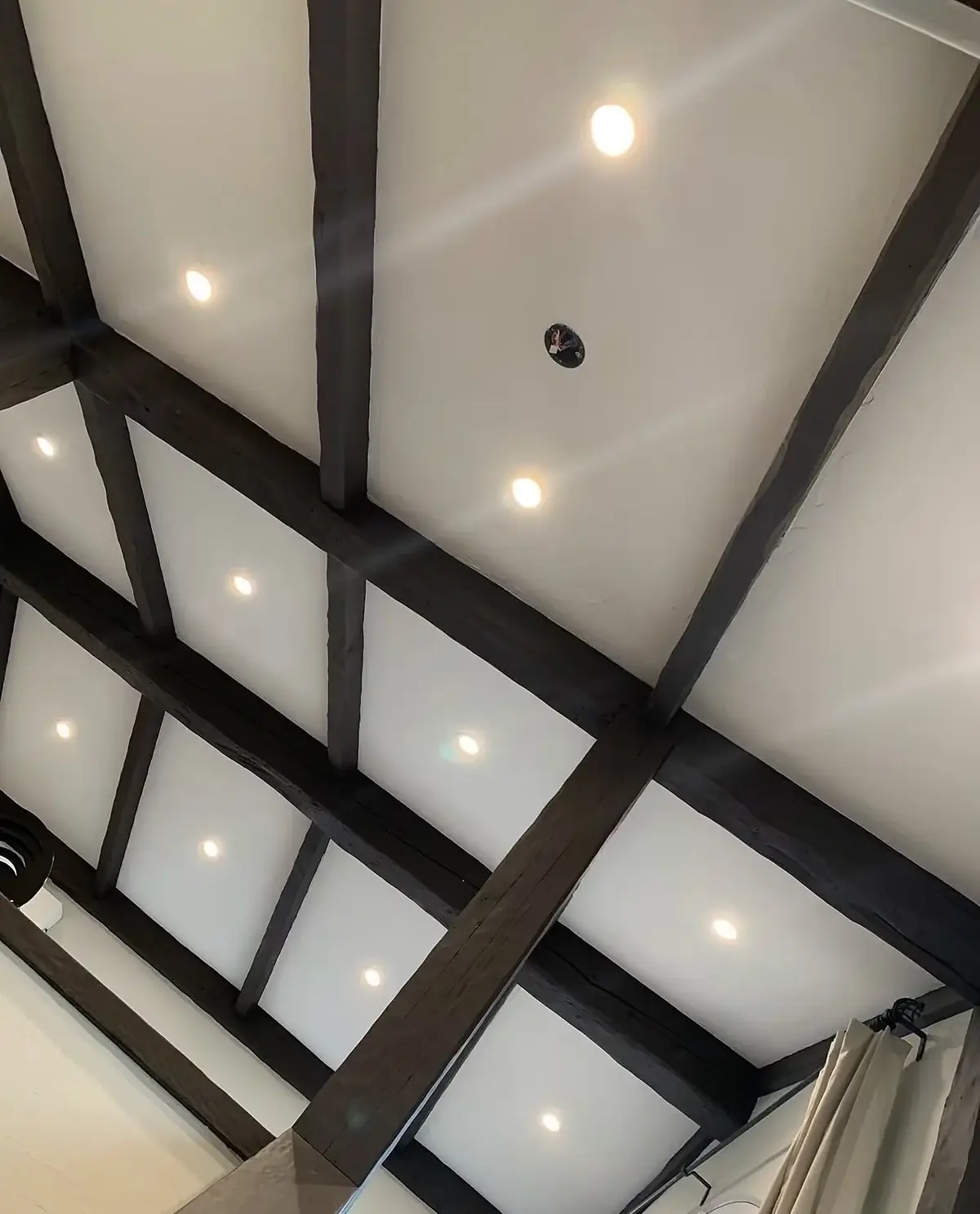
Pot lights in Woodbridge houses are usually either a kitchen that needs even light over the counters or a living room replacing a single centre fixture. The difference between a good result and a ceiling full of holes is the layout: spacing set by the room and what happens in it, not by the joists.
What it includes: a layout drawn before anything is cut, slim LED fixtures or housings as the ceiling allows, insulation-contact rating where there is insulation above, grouping onto switches and dimmers by zone, and a check of the circuit load.
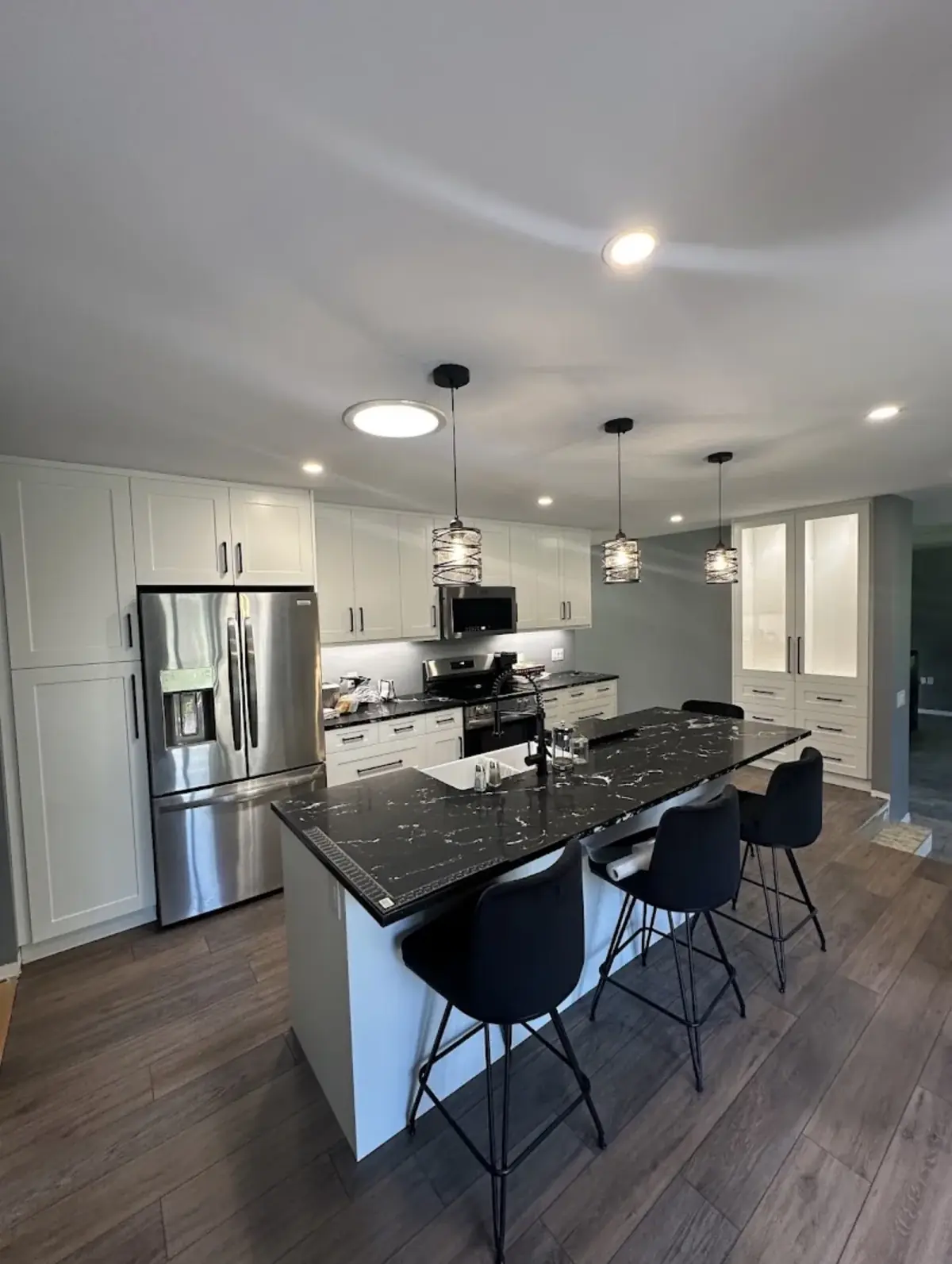
Pendants: hung at a height that suits the table or island, on a ceiling box that can carry the weight, with the cord or rod cut to length. Three over an island, one over a table, or a sculptural piece in a living room: the box and the dimmer are what make it work.
What decides the scope: access above the ceiling, the number of fixtures and switch groups, and whether the existing wiring can be reused or has to be replaced.
Kitchen lighting
A kitchen needs light in layers: recessed lights over the counters for work, pendants over the island for sitting, under-cabinet strip so your own shadow is not on the cutting board, and all of it on separate dimmers so the room can change from cooking to dinner.
The electrical behind a kitchen matters as much as the fixtures. The Ontario Electrical Safety Code sets out how counter receptacles are spaced and protected and which appliances get their own circuit, and a renovation is the moment to bring those up to date while the walls are open.
When a home needs it: any kitchen renovation; an island being added where there was none; a kitchen with one ceiling fixture and dark counters.
Outdoor lighting
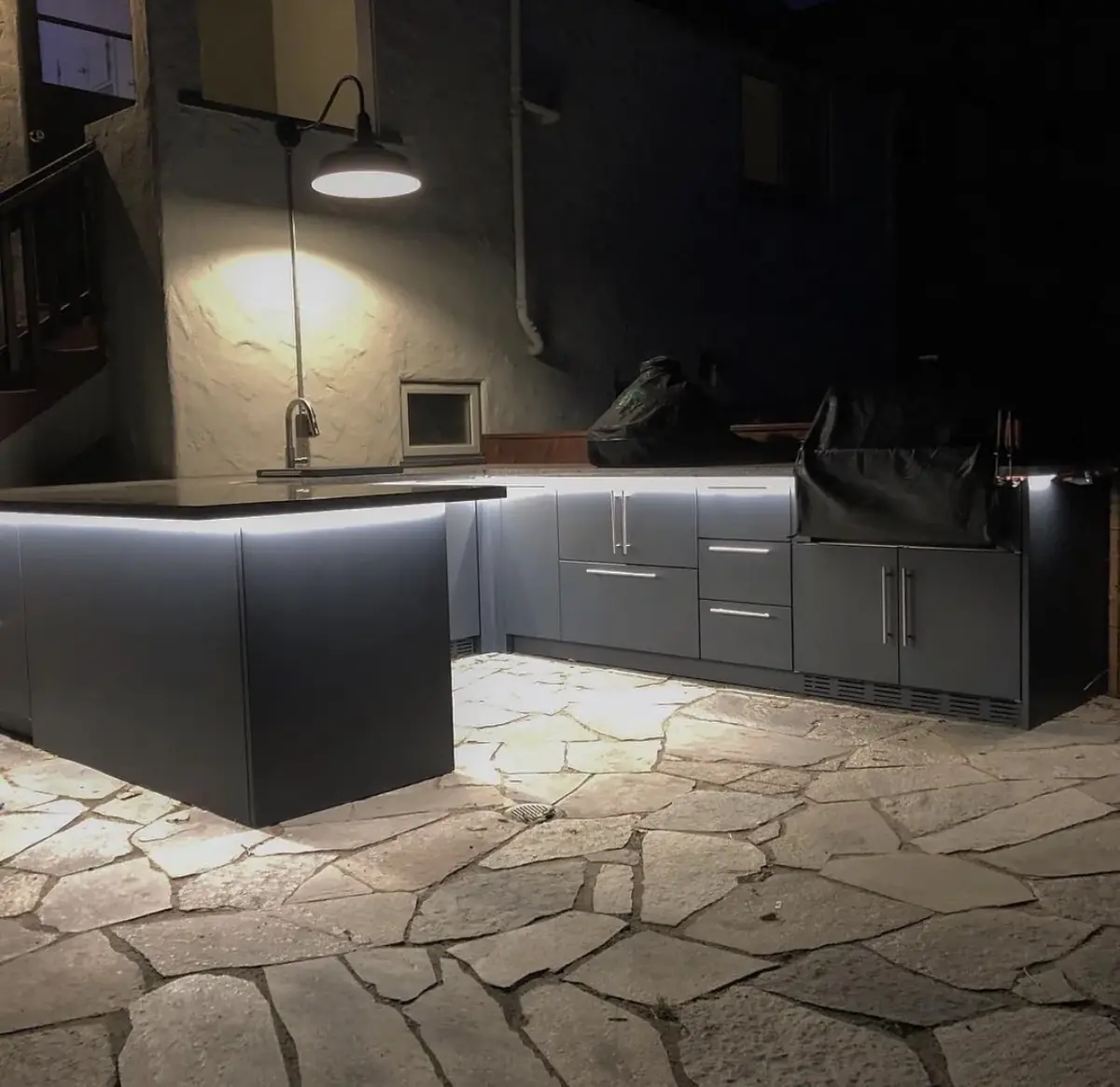
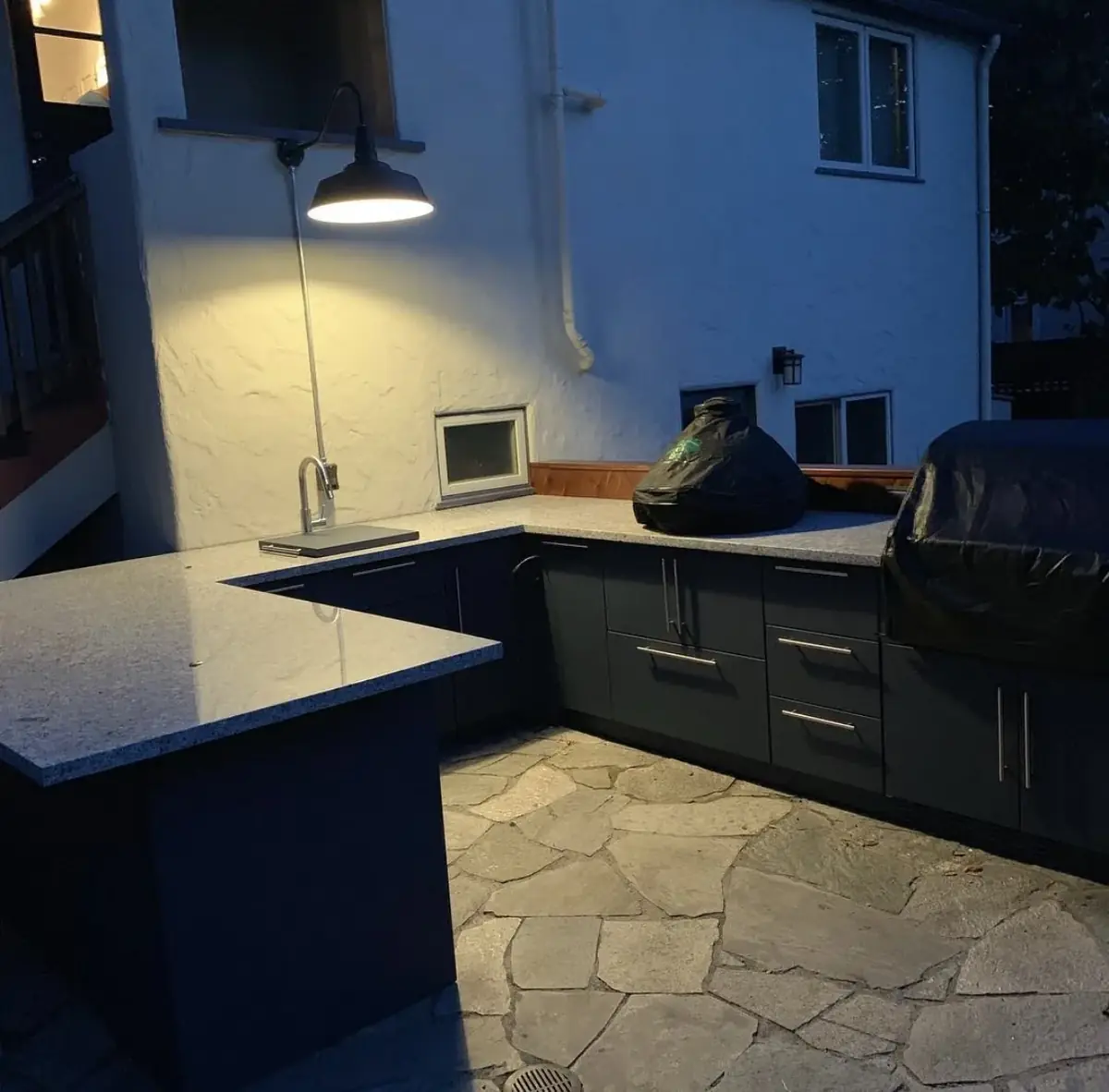
Outside, light should be aimed at something: the shrubs along a front bed, the steps, the counter of an outdoor kitchen, the wall by a door. Fixtures pointed at nothing in particular are what make a house glare from the street.
What it includes: wall lights and soffit downlights on weatherproof boxes, LED strip under counters and steps, low-voltage landscape uplighting with the transformer in a sensible place, ground-fault protection on every outdoor circuit, and a timer or photocell so no one has to remember the switch.
What decides the scope: how far the run is from the panel, whether cable goes underground or along the house, how many fixtures, and whether there is an outdoor kitchen or hot tub that needs its own circuit.
Statement fixtures
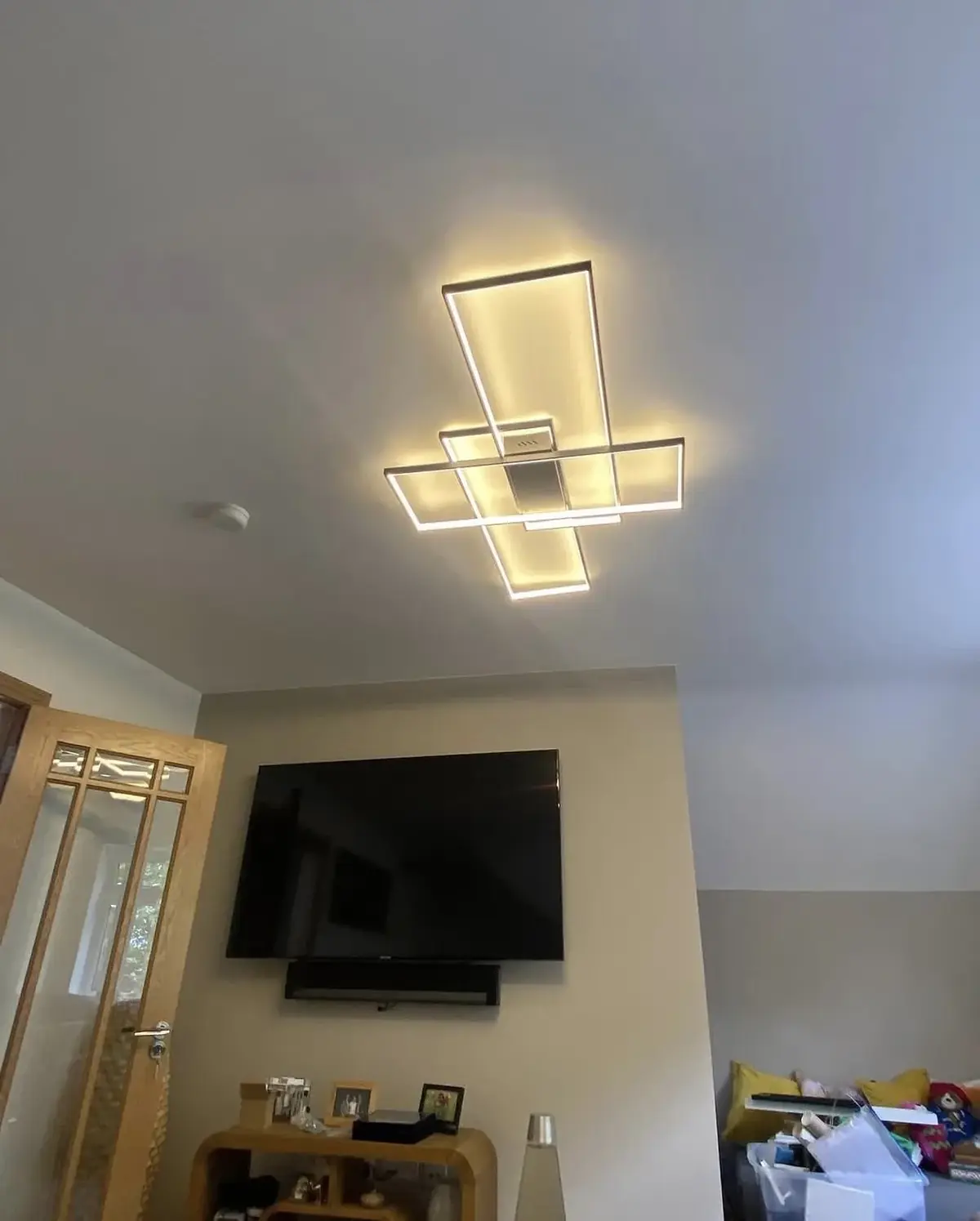
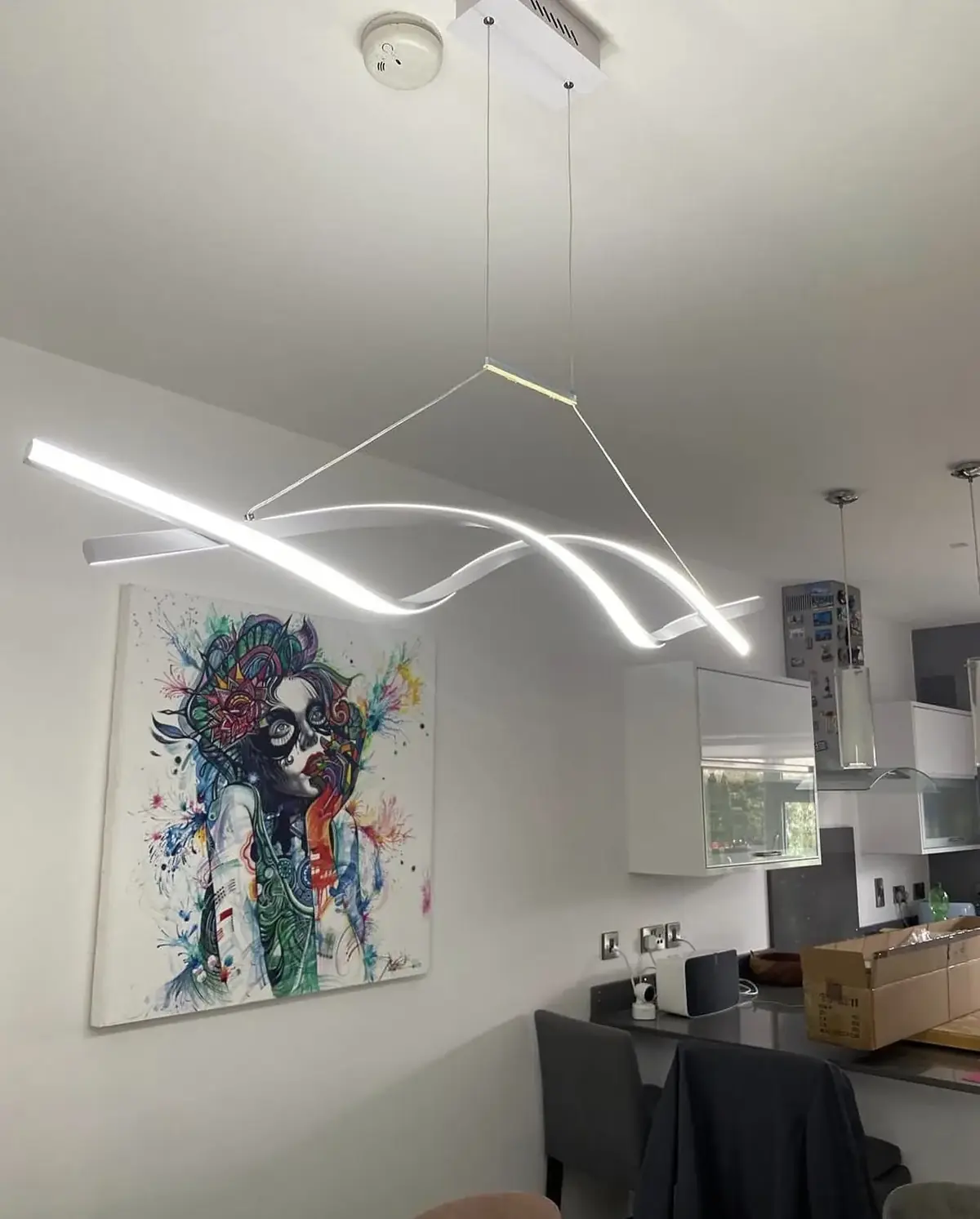
A sculptural or geometric LED fixture is often the one thing a client has chosen before calling us. Our part is to make it hang straight and work properly: a ceiling box rated for its weight, the canopy centred where it should be rather than where the old box was, the cable cut to length, and a dimmer matched to the driver so it does not hum.
If the fixture is not yet bought, send us the model before you order. The mounting and dimming requirements are easier to meet on paper than after delivery.
Repairs and small jobs
The unglamorous half of electrical work, and we take it seriously. Common calls in Woodbridge houses:
- Lights that flicker or buzz on a dimmer. Usually a dimmer that was not made for LED. Matching the dimmer to the fixtures fixes most of it; flicker across several rooms at once is a different problem and gets looked at promptly.
- A dead outlet with no breaker tripped. Often a ground-fault outlet elsewhere on the circuit has tripped, or a connection has come loose in a box upstream. The loose connection is a heat risk and gets repaired, not bypassed.
- A switch or outlet that is warm, loose or discoloured. Stop using it. Heat at a device means a poor connection or a device carrying more than it should.
- Old halogen pot lights. They run hot and the transformers fail. Replacing them with LED fixtures in the same openings is a common, tidy job.
- A fixture you want moved or replaced. Including the ceiling box when the new fixture is heavier than the old one.
Every repair ends with the circuit tested under load, so the fix shows in the readings and not just in the light coming on.
Not sure which of these you need?
Describe the room and what you want it to do in the evening. That is enough to start.