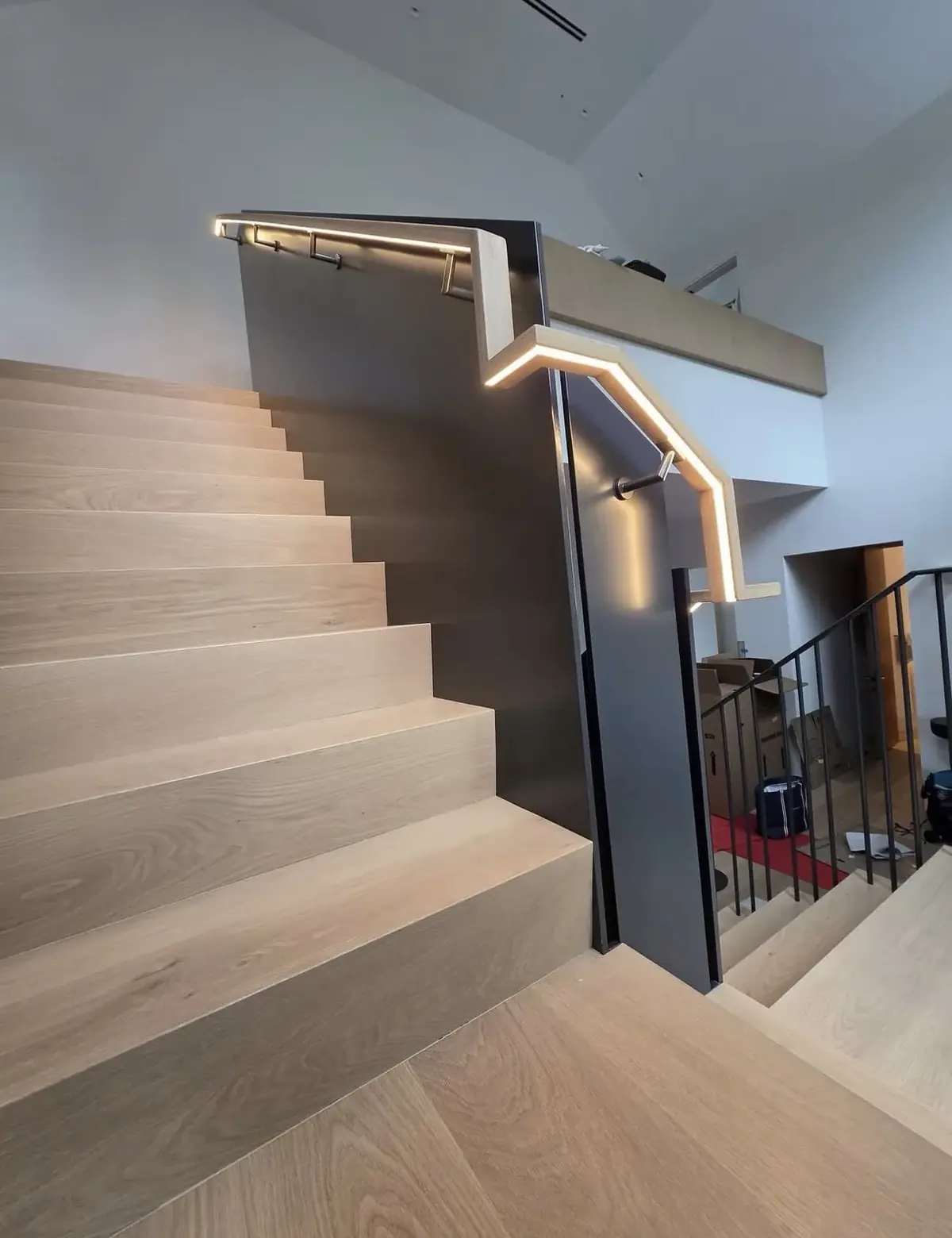
Accent
An LED strip set into the handrail follows the stair up and wraps the landing. Light lands on the treads with no fixture on the wall and nothing to glare into your eyes on the way down.
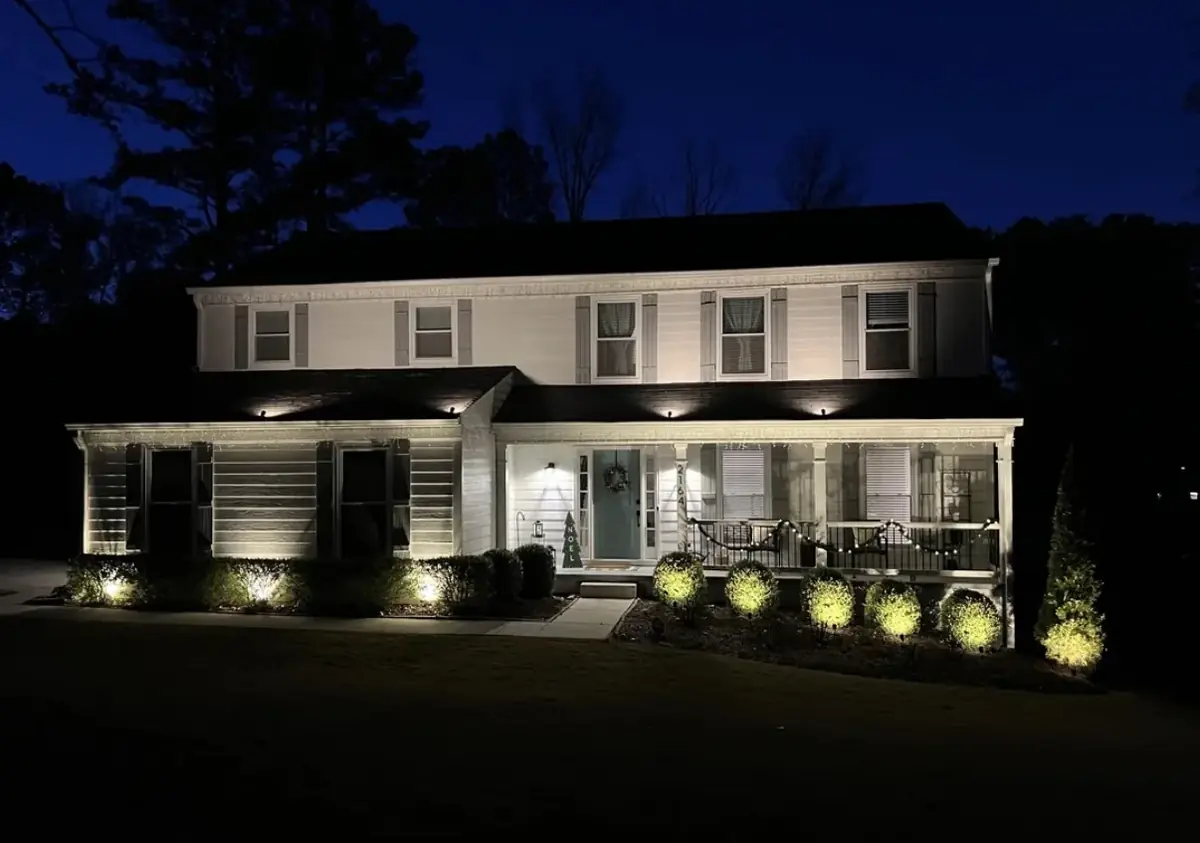
Residential electrical installation and lighting improvements in Woodbridge.
Most of a home's electrical work disappears behind drywall. Lighting is the part that stays visible, and it decides how a room reads at seven in the evening: whether the kitchen island is a place to sit, whether the stair is easy on the feet in the dark, whether the house looks like itself from the street.
We plan the lighting and the electrical behind it together. That means circuits and switching that match how a room is used, dimming that works with LED fixtures, and fixtures placed where the architecture asks for them rather than where the old box happened to be. The repairs and upgrades that keep the rest of the house working are part of the same job.
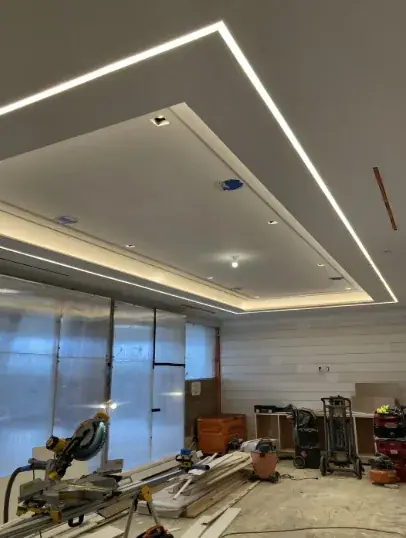
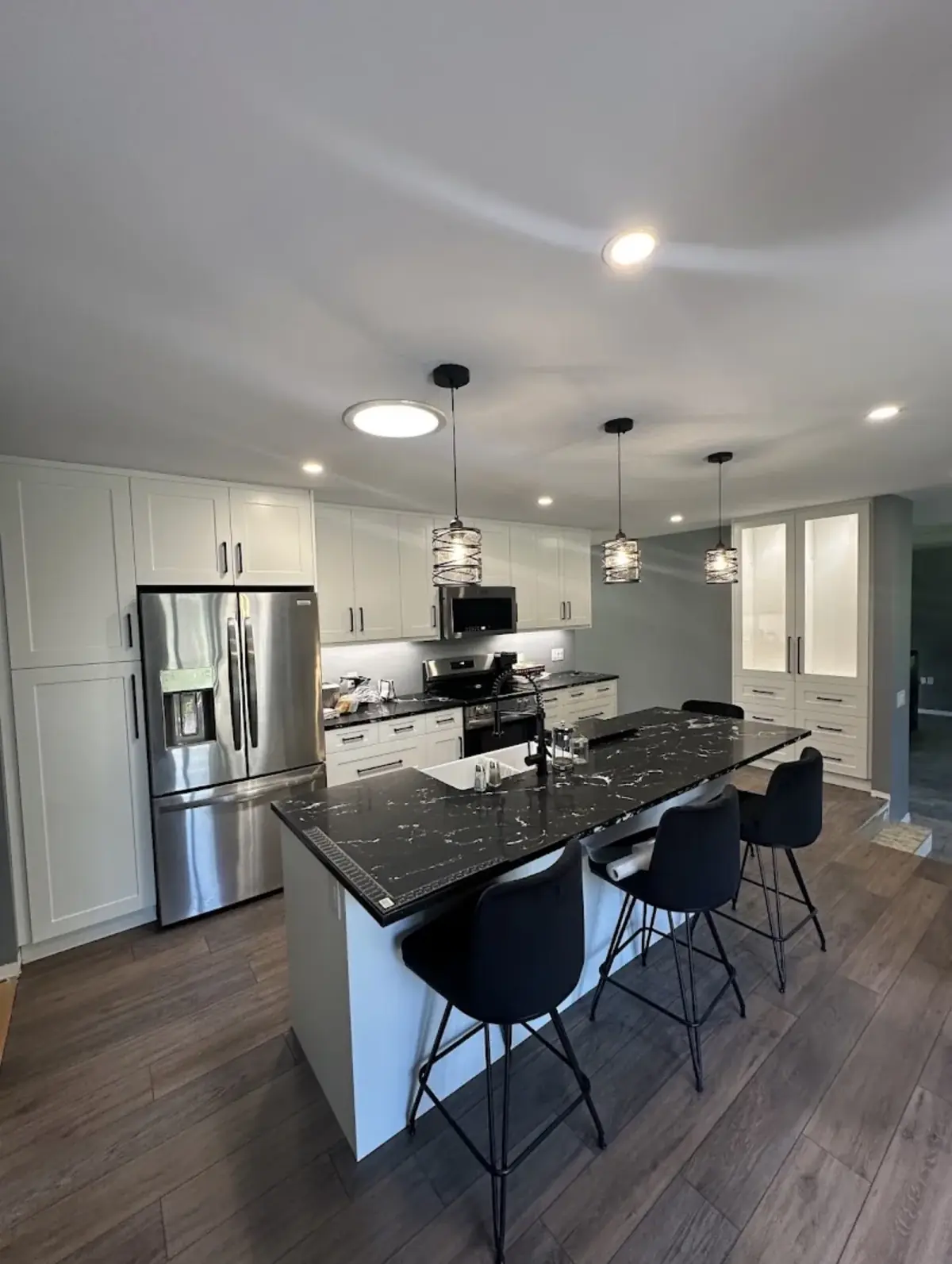
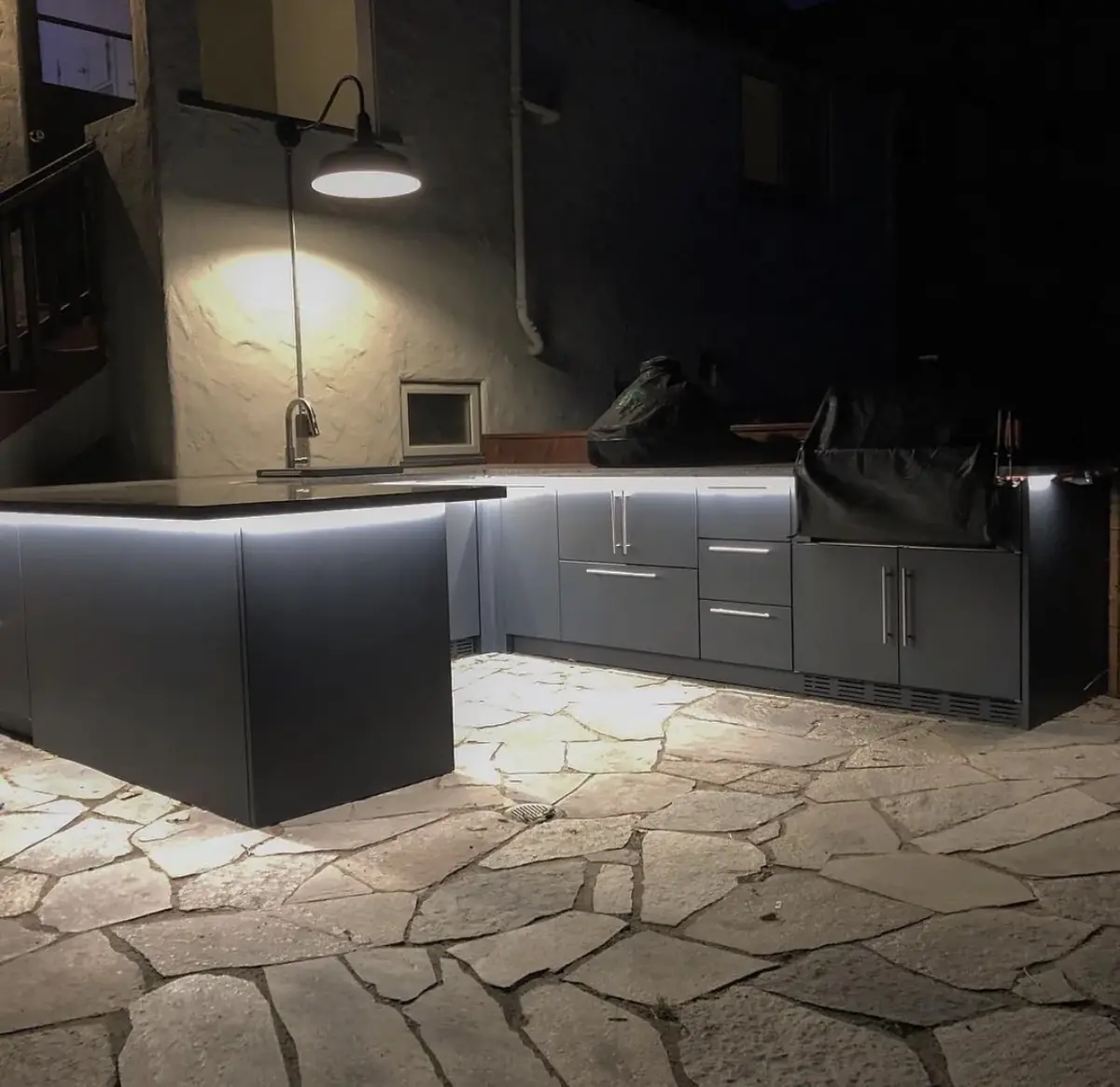
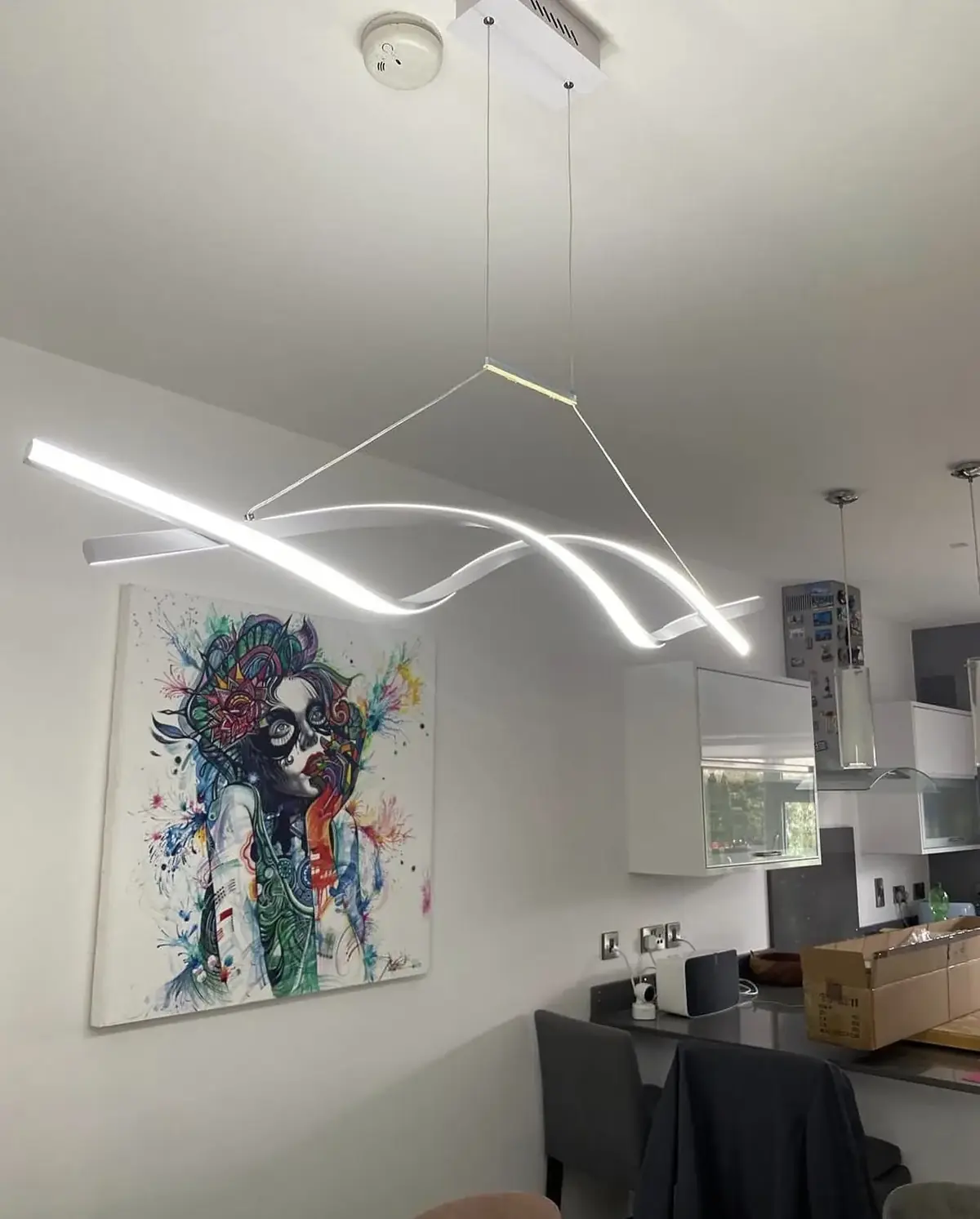
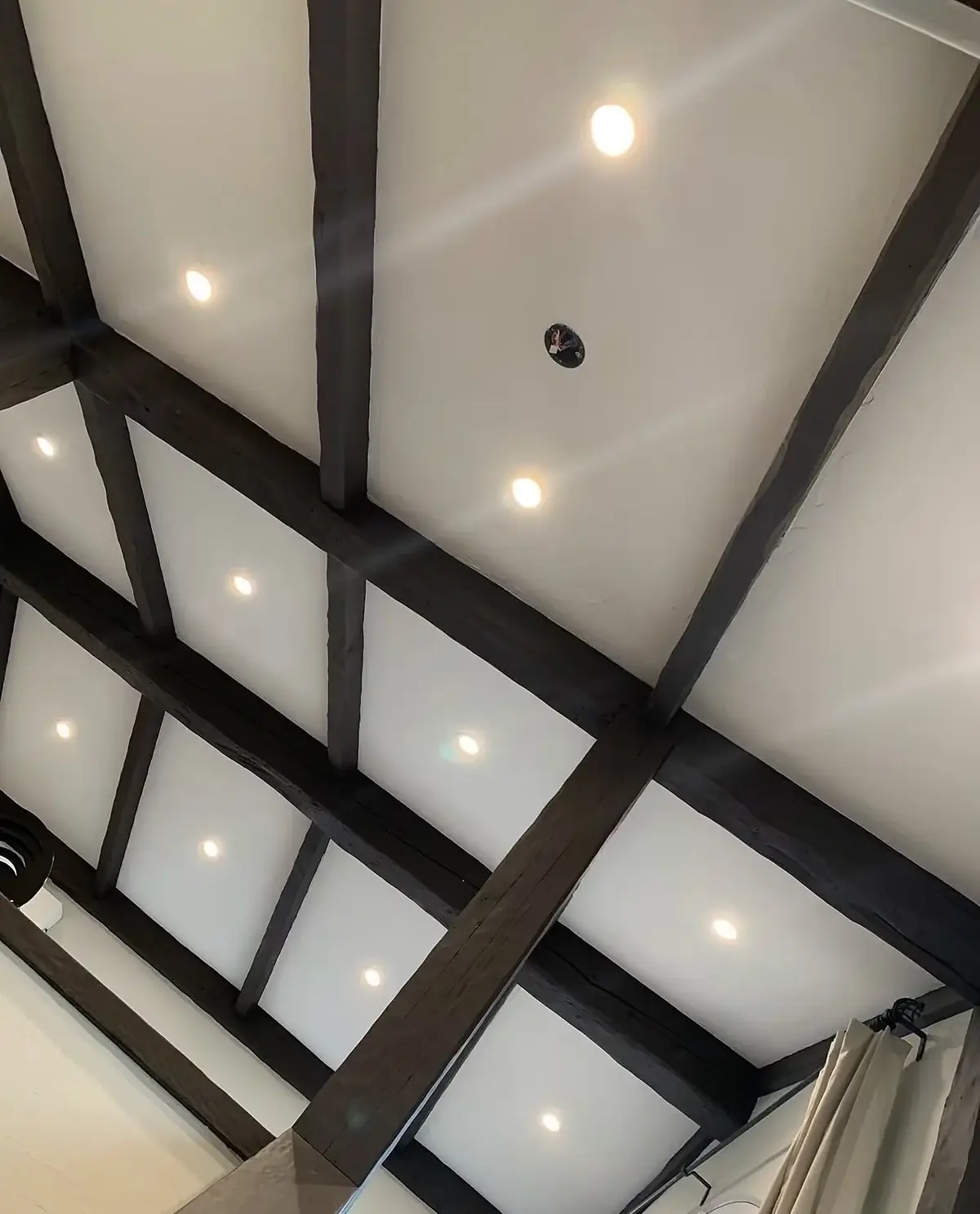
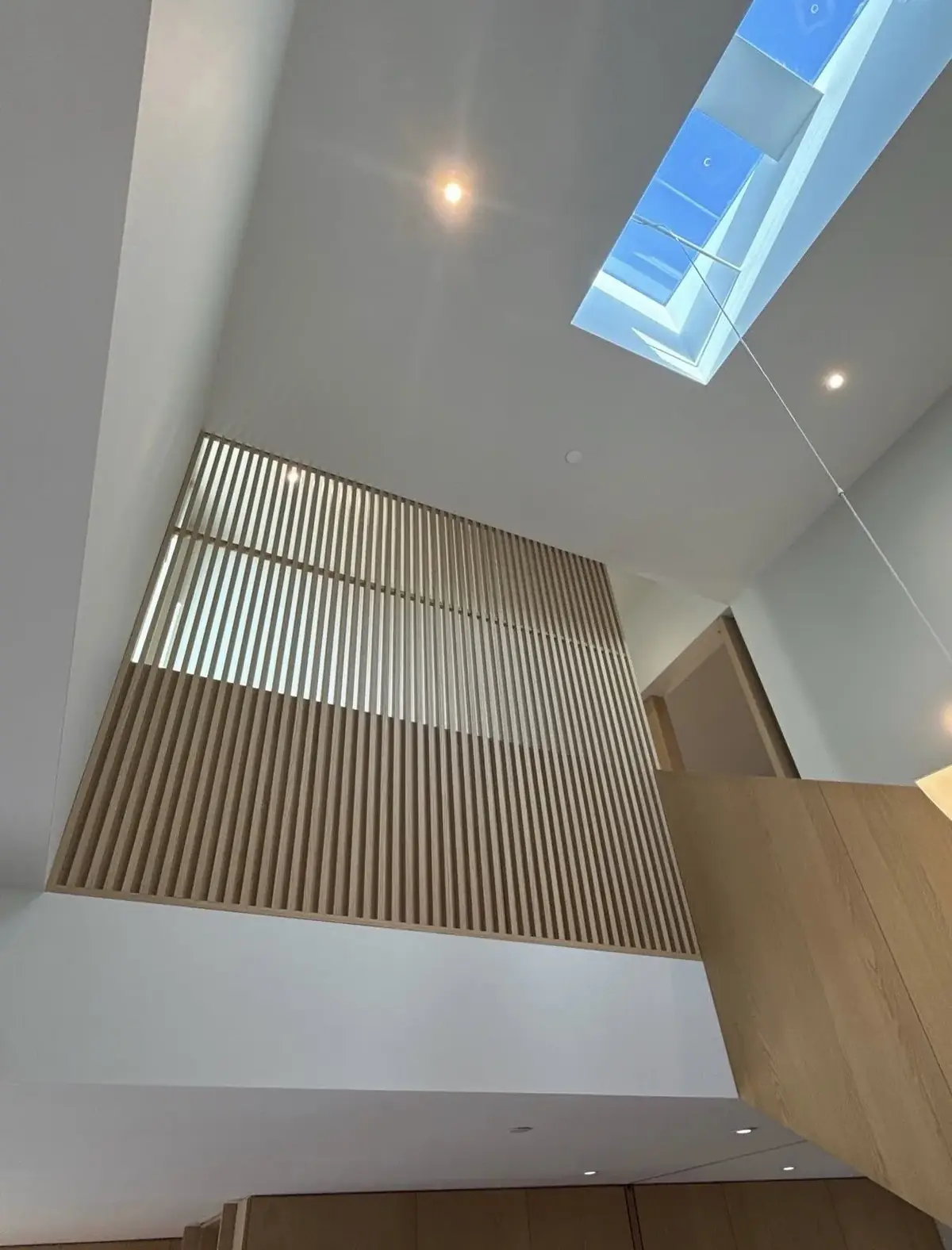
Linear LED in coves, handrails and under counters. Recessed downlights laid out to the room rather than to the joists. Pendants and sculptural fixtures hung at the right height, on a box that can carry them and a dimmer that suits them. Inside and out.
Fixtures that flicker, switches that have stopped answering, outlets that are loose or warm to the touch, LED lights that will not dim cleanly, and old halogen pot lights that want replacing. The ordinary electrical work in a Woodbridge house, done carefully and tested before we leave.
Rough-ins for kitchens, basements, lofts and additions. New circuits for appliances and outdoor kitchens. Panel and outlet upgrades where the house needs them, with the notification to the Electrical Safety Authority filed as part of the work.
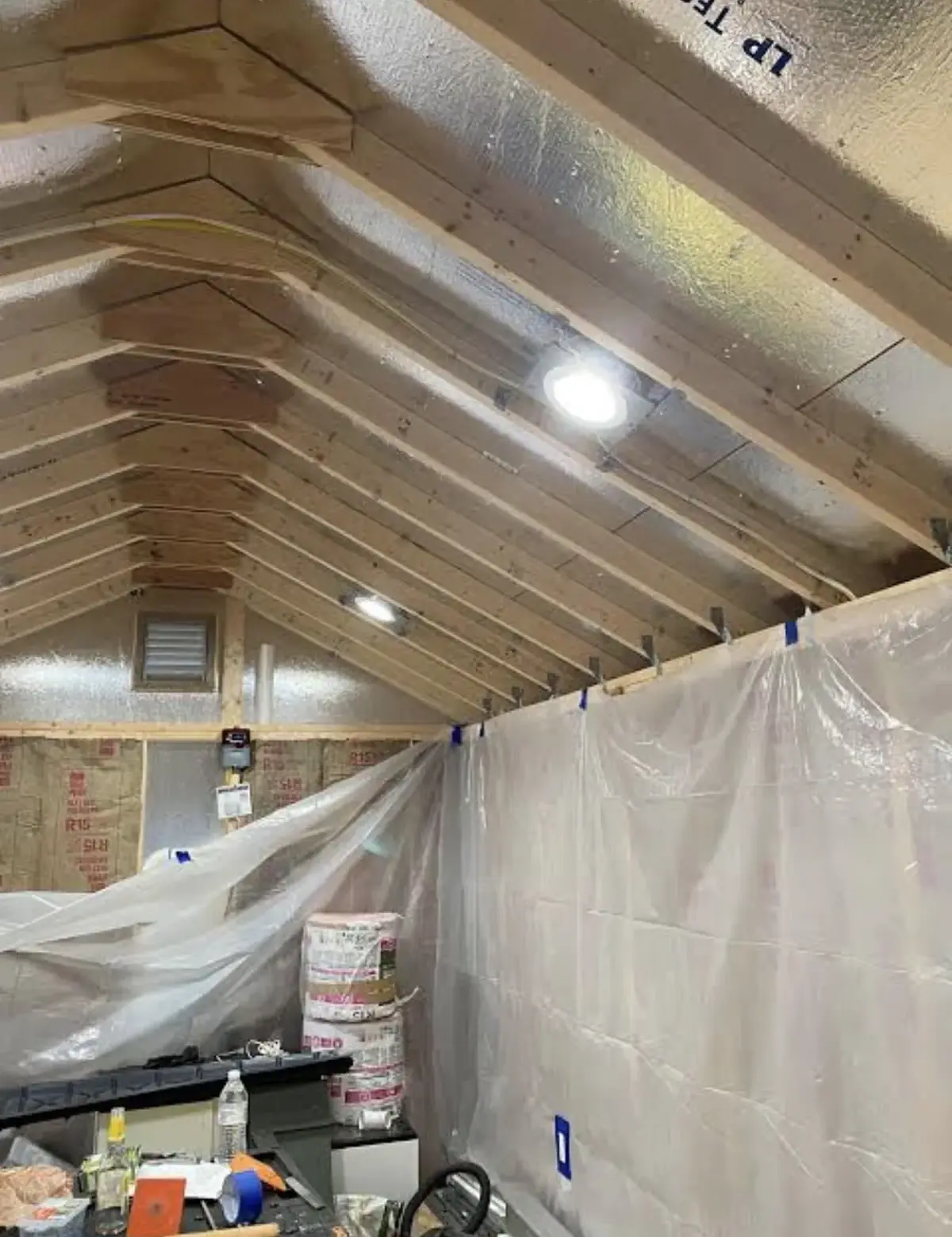
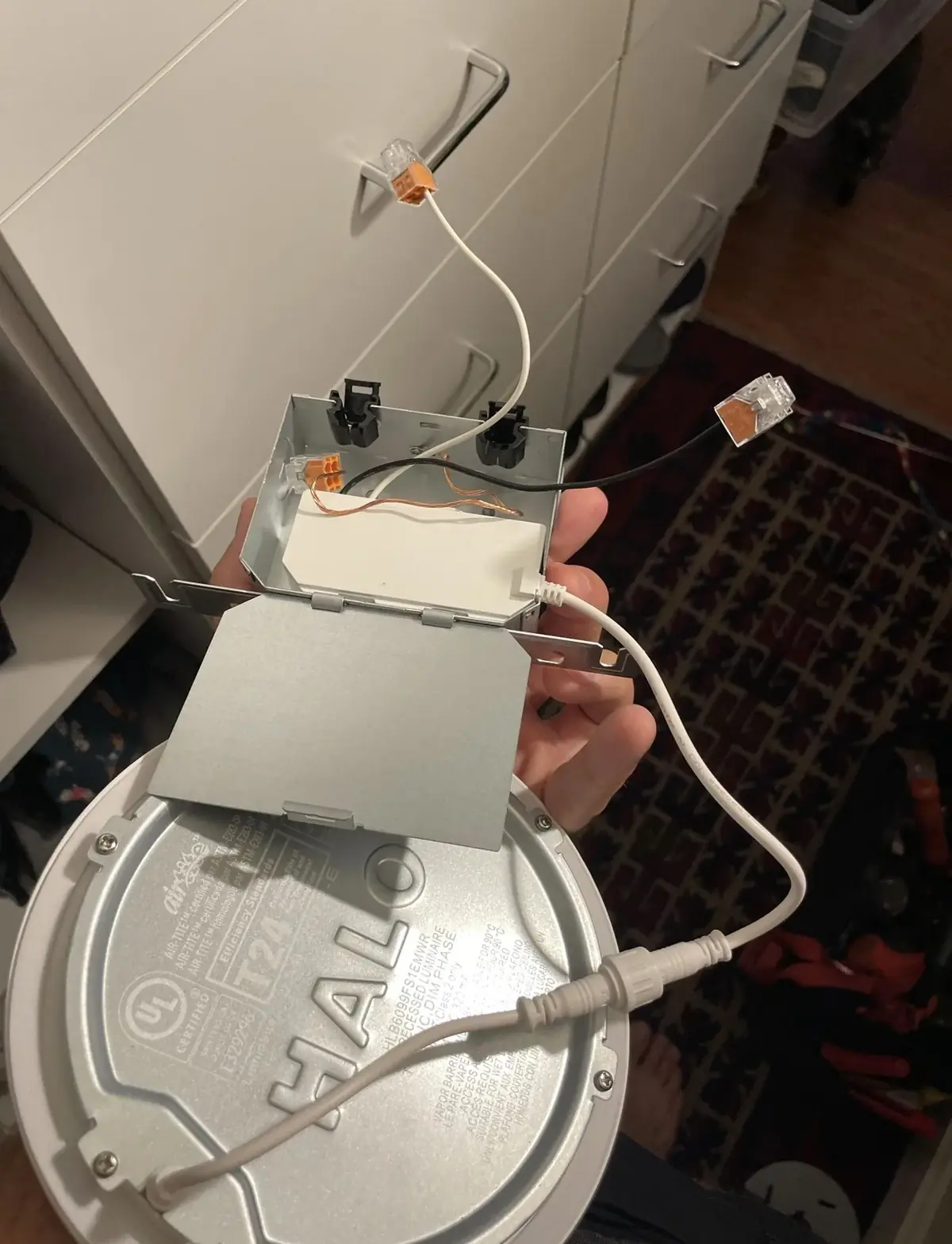
The lighting in the photos above starts as boxes, cable and housings fixed to framing. That stage is when a layout can still change at no cost, and it is the stage the ESA inspector looks at before insulation and drywall go in. These two photos are from that point in a job.
Tell us the project type, whether that is new lighting, a renovation rough-in, a repair or a panel and outlet upgrade, and the timeline you have in mind. We reply to confirm scope and timing before any visit.
150 Woodbridge AveWoodbridge, including Old Woodbridge, East Woodbridge, West Woodbridge, Sonoma Heights and Pine Valley.
Usually, yes. Slim LED fixtures like the one shown above need a small hole and a junction box above the drywall, not a full housing, so most finished ceilings can take them. Where there is insulation above, the fixture has to be rated for insulation contact. We check the circuit load and agree the switching before anything is cut.
Most often the dimmer was made for incandescent bulbs and cannot control an LED driver, so the lights flicker, buzz or drop out at the low end. A dimmer rated for the fixtures, set up for their minimum load, fixes it in most cases. Occasionally the fixture itself is not dimmable, which is worth knowing before buying more of them.
In Ontario, most new wiring, including new circuits and added fixtures, requires a notification to the Electrical Safety Authority (ESA) and an inspection. Replacing a fixture or a switch like for like generally does not. We file the notification for the work that needs it; it is part of the job, not an extra.
Both. A dead outlet, a switch that has failed or a fixture that flickers is a normal call for us. If the fault turns out to be a loose connection somewhere upstream, we find it rather than replace the part that happened to be nearest.
Woodbridge, including Old Woodbridge, East Woodbridge, West Woodbridge, Sonoma Heights and Pine Valley. If you are nearby in Vaughan and not sure, ask.